Source Digital Gear Oil Tester for automotive, industrial, and marine use
Find 30 verified options for the Digital Gear Oil Tester to compare specifications like pressure range, accuracy, and display type. Buyers can evaluate models such as TP23707 and LC-100KV for diverse vehicle and equipment testing needs.
Key considerations
Products List


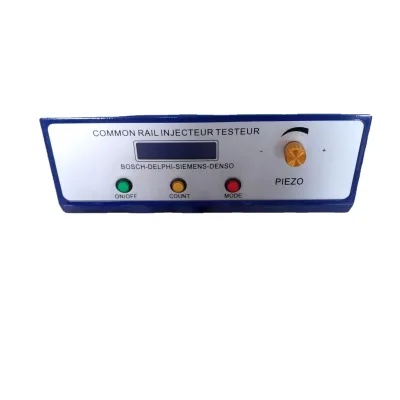
Advanced Transformer Oil Tester for Accurate Breakdown Voltage Measurement
$1300.00 - $1900.00
MOQ: 1 Sets




Comprehensive Sourcing Guide
Strategic Sourcing Guide for Digital Gear Oil Testers
Navigating the global market for digital gear oil testers requires a disciplined approach that balances technical precision with supply chain reliability. Buyers entering this sector must distinguish between general fluid analysis tools and specialized equipment designed for specific viscosity, pressure, and surface tension measurements. The following guide outlines the critical dimensions of sourcing these instruments, grounded in observed product attributes and industry standards.
Understanding Technical Specifications and Variability
The core of any procurement decision lies in the technical specifications of the device. In the current market, digital gear oil testers exhibit significant variation in form factor and measurement capabilities. Buyers must carefully evaluate the physical dimensions and operational parameters to ensure compatibility with their existing laboratory or field infrastructure.
Observed data indicates a wide range of physical configurations. Some units feature a compact design with a tester length of 175mm and a diameter of 65mm, while others are larger, measuring 235mm in length with a 90mm diameter. The probe length also varies, with options ranging from 240mm to 260mm, and probe diameters typically settling around 5mm. These physical differences are not merely aesthetic; they dictate the accessibility of the tester in confined engine bays or the depth of immersion required for specific fluid samples.
The display technology is another critical differentiator. While many modern units utilize Digital LCD screens, some advanced models offer a hybrid approach with both Analogue and Digital display types. For high-precision environments, a High-Resolution LCD is often preferred to ensure clear reading of minute fluctuations in data. Power requirements also vary significantly; some devices operate on a 12V supply, suitable for direct vehicle integration, while others require AC 220V±10% or 110V±10% at 50/60Hz, necessitating a stable power source or generator.
When evaluating the measurement capabilities, buyers should look for specific ranges. Pressure testers may cover a range of 0 to 10 Bar, while surface tension devices might operate between 0 to 200 Mn/M. Accuracy is paramount; observed units claim accuracies of ±1% of Full Scale or 1% to 2% depending on the specific model and application. The operating temperature range is equally vital, with robust units capable of functioning from -20°C to 60°C, ensuring reliability in diverse climatic conditions.
Compliance, Certification, and Standardization
In the B2B procurement of industrial testing equipment, compliance with international standards and certifications is non-negotiable. These factors serve as the primary indicators of product safety and reliability. The market data highlights specific certifications, such as CE, which is a mandatory requirement for products entering the European Economic Area. Buyers must verify that the supplier provides valid certification documentation before finalizing any order.
Standardization extends beyond safety to include product model identification and packaging norms. Products are often identified by specific model numbers, such as TP23706, TP23706, or 48110040, which correspond to distinct standard configurations. For instance, the TP23706 series adheres to specific dimensional standards, while other models may follow different packaging standards like 650x470x410mm or 48x29x40cm.
It is crucial for buyers to understand that "Standard" in product attributes often refers to a baseline configuration rather than a universal industry norm. Therefore, procurement teams must request detailed standard compliance sheets from suppliers. This documentation should explicitly state which international standards the device meets, whether for electrical safety, measurement accuracy, or environmental resistance. Without this verification, buyers risk acquiring equipment that may not pass regulatory audits in their specific jurisdiction.
Cost Drivers and Pricing Dynamics
The pricing structure for digital gear oil testers is influenced by a complex interplay of factors, including material costs, technological complexity, and customization levels. The observed market data reveals a vast price range, extending from $0.50 to $15,000. This disparity is not indicative of quality variance alone but reflects the diversity of product types available, from simple handheld probes to complex automated systems.
Several key drivers influence the final cost. First, the power supply requirements play a significant role. Units requiring AC 220V or 110V power supplies often incorporate more complex internal circuitry and safety components, leading to higher costs compared to 12V DC units. Second, the accuracy and resolution of the display and sensors directly impact price. A device with 1% accuracy and high-resolution LCD capabilities will command a premium over a basic unit with 2% accuracy and a standard display.
Customization is another major cost factor. Products marked as "Customized" or "Available" for customization often incur additional charges. These modifications can range from specific probe lengths to tailored packaging solutions, such as wooden cases versus standard cartons. The packaging itself, whether it is a blow case, carton, or wooden crate, adds to the overall cost, particularly for heavy or fragile instruments.
Buyers should also consider the Minimum Order Quantity (MOQ) as a cost driver. The observed MOQ range spans from 1 to 10,000 units. While a single unit purchase is feasible, the per-unit cost may be higher due to the lack of economies of scale. Conversely, bulk orders can significantly reduce the unit price but require a larger upfront capital investment and storage capacity.
Typical Applications and Operational Context
Digital gear oil testers serve a variety of critical applications across the automotive, industrial, and laboratory sectors. The versatility of these devices allows them to be used for engine oil pressure testing, surface tension analysis, and general fluid quality assessment. The compatibility with various brake fluids, such as DOT 3, DOT 4, and DOT 5.1, highlights their utility in automotive maintenance and repair environments.
In industrial settings, these testers are essential for predictive maintenance. By monitoring oil pressure and viscosity, facility managers can detect early signs of engine wear or contamination, preventing costly downtime. The ability to operate in a wide temperature range (-20°C to 60°C) makes these tools suitable for outdoor equipment and heavy machinery used in extreme environments.
Laboratories utilize these devices for quality control and research. The Du Nouy Ring Method, a specific test method mentioned in the product data, is commonly used for measuring surface tension, a key parameter in fluid dynamics and chemical analysis. Devices with a capacity of 1.5kVA and voltage outputs up to 100kV are likely used in high-voltage testing scenarios, providing insights into the dielectric properties of oils.
The "Suitable for Various Vehicles" attribute suggests that these testers are designed for broad applicability, making them ideal for fleet management companies and multi-brand service centers. However, buyers must ensure that the specific model selected matches the exact requirements of their application, as a general-purpose tester may not provide the precision needed for specialized industrial processes.
Supplier Evaluation and Origin Verification
Selecting the right supplier is as critical as selecting the right product. The origin of the product is a primary indicator of supply chain stability and quality control. Data indicates that many products originate from Fujian, China, or generally from China. While this region is a major hub for manufacturing, buyers must conduct thorough due diligence to ensure the supplier maintains consistent quality standards.
When evaluating suppliers, buyers should request proof of origin and traceability. This includes verifying the specific factory location and the production history of the model. The "New" condition of the products is a standard expectation, but buyers should confirm that the items are not refurbished or overstocked without disclosure.
Supplier reliability is also measured by their ability to meet customization requests and provide clear communication. The availability of customization options suggests a flexible manufacturing process, but buyers must assess the lead times associated with these custom orders. Additionally, the packaging method, such as "in Cartons" or "Wooden Case," should be evaluated for its ability to protect the equipment during transit, especially for international shipments.
Quality Control and Long-Term Procurement Considerations
Ensuring long-term value requires a robust quality control strategy. Buyers should implement a verification process that includes checking the accuracy claims against independent test results. While the data lists accuracies of ±1% or 2%, these figures must be validated through third-party testing to ensure they hold true in real-world conditions.
Repeatability is another key metric for quality assurance. A product with a repeatability of 3% indicates a high level of consistency, which is essential for reliable data collection. Buyers should request sample test reports to verify these claims before committing to a large order.
For long-term procurement, the availability of spare parts and technical support is crucial. The "Standard" and "Customized" attributes suggest that some components may be interchangeable, but buyers should confirm the supply chain for replacement probes, batteries, and display units. The battery type, specified as a 12V supply, should be compatible with standard industry batteries to ensure easy replacement.
Finally, buyers should consider the total cost of ownership, including maintenance, calibration, and potential downtime. A device with a high initial cost but superior accuracy and durability may offer better long-term value than a cheaper, less reliable alternative. Establishing a relationship with a supplier who offers comprehensive after-sales support and calibration services is essential for maintaining the integrity of the testing program over time.
Summary of Key Product Attributes
To assist in the decision-making process, the following table summarizes the key attributes observed in the market for digital gear oil testers. This comparison highlights the variability in specifications that buyers must navigate.
| Attribute Category | Observed Range / Options | Critical Verification Point |
|---|---|---|
| Model Numbers | TP23706, TP23707, 48110040, LC-100KV | Ensure model matches specific application needs. |
| Display Type | Digital LCD, High-Resolution LCD, Analogue & Digital | Verify readability in intended lighting conditions. |
| Dimensions | Length: 175mm-235mm; Diameter: 65mm-90mm | Check physical fit for target equipment. |
| Accuracy | ±1% to 2% of Full Scale | Request independent validation of accuracy claims. |
| Power Supply | 12V DC, AC 220V/110V | Confirm compatibility with site power infrastructure. |
| Operating Temp | -20°C to 60°C | Ensure suitability for local environmental conditions. |
| Certification | CE | Verify valid certification documentation. |
| Packaging | Cartons, Blow Case, Wooden Case | Assess protection level for shipping. |
| Origin | Fujian, China; General China | Verify factory location and quality control standards. |
By adhering to these guidelines and maintaining a rigorous approach to specification verification, buyers can effectively source digital gear oil testers that meet their operational requirements while mitigating supply chain risks.
FAQs
What power supply options are available for digital gear oil testers?
Digital gear oil testers operate on either a 12V supply or AC 220V±10% and 110V±10% at 50/60Hz. Buyers must verify site power compatibility before selecting a model, as 12V units suit direct vehicle integration while AC units require stable external power sources.
Which certifications should I look for in a Digital Gear Oil Tester?
CE certification is a mandatory requirement for products entering the European Economic Area and is observed in the market. Buyers must verify valid certification documentation from suppliers to ensure product safety and regulatory compliance before finalizing any order.
How does the accuracy of these testers vary across different models?
Observed units claim accuracies ranging from ±1% of Full Scale to 2% depending on the specific model and application. High-precision environments often require the ±1% accuracy units, while basic applications may accept the 2% accuracy specifications found in other models.
Can I find customized digital gear oil testers with specific probe lengths?
Customization is available for various parameters including probe lengths, which range from 240mm to 260mm in observed data. Buyers requesting custom modifications should expect additional charges and longer lead times compared to standard configurations like the 235mm length.
What is the typical operating temperature range for these devices?
Robust units are capable of functioning from -20°C to 60°C, ensuring reliability in diverse climatic conditions. This wide range makes the tools suitable for outdoor equipment and heavy machinery used in extreme environments where temperature fluctuations are common.
Which packaging types are used for shipping digital gear oil testers?
Packaging varies from standard cartons to specialized blow cases and wooden cases depending on the product weight and fragility. Heavy instruments often require wooden cases, while lighter units may be shipped in cartons or blow cases to ensure protection during transit.
What is the minimum order quantity for purchasing these testers?
The observed minimum order quantity ranges from 1 to 10,000 units depending on the supplier and customization level. Single unit purchases are feasible but may carry a higher per-unit cost, whereas bulk orders can significantly reduce the price through economies of scale.